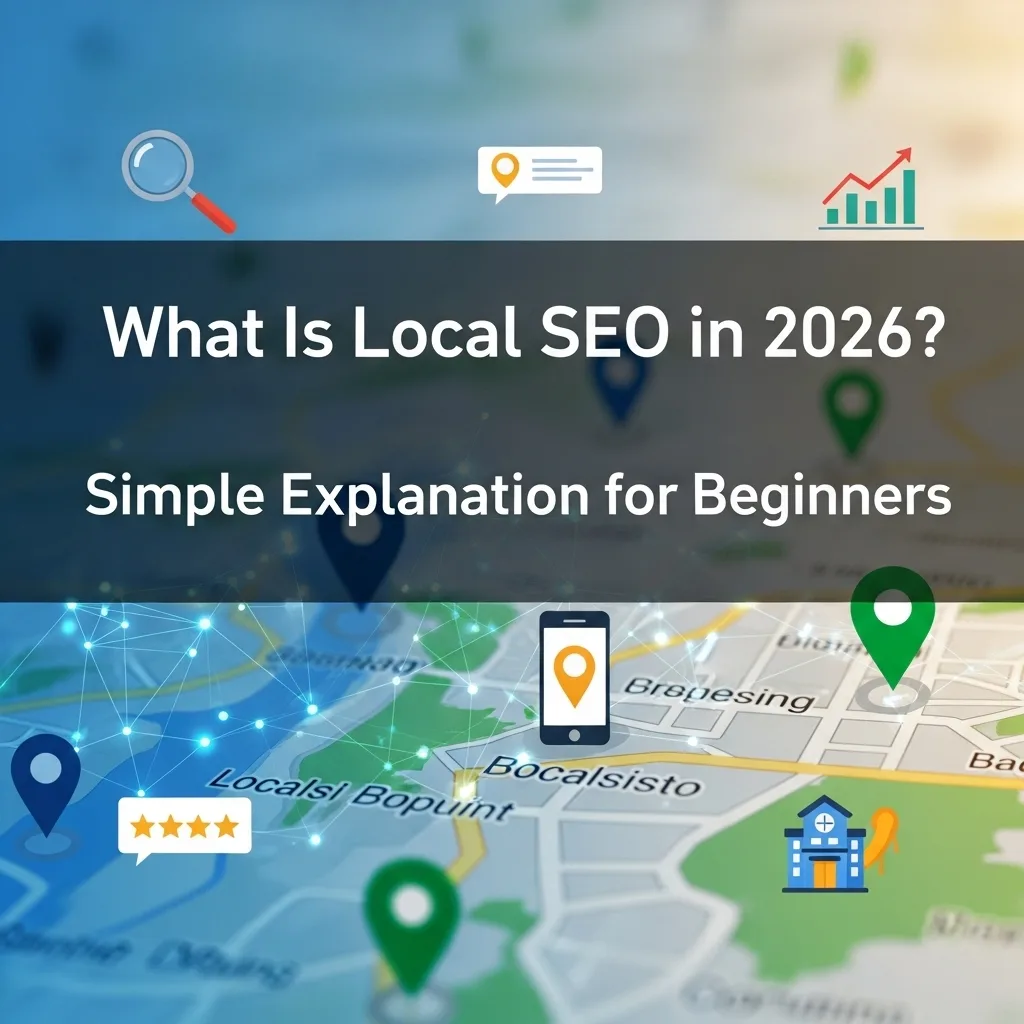
What Is Local SEO in 2026? Simple Explanation for Beginners
If you are a student planning to learn digital marketing in 2026, understanding what is local SEO can give you a serious advantage right from the start. Local SEO is no longer just a marketing tactic limited to small shops or neighborhood businesses—it has evolved into a core digital marketing skill that every beginner should understand. Many strategies for 2025 are still relevant today, and knowing them can help you get ahead in your learning journey.
In today’s competitive online world, businesses don’t just want traffic; they want relevant local customers who are ready to visit, call, or buy. This is exactly where local SEO becomes important. For students, it offers hands-on learning, faster visible results, and real-world experience that can lead to internships, freelancing, or full-time roles. It also contributes to brand awareness for local businesses.
In this complete guide to local SEO, you’ll learn what local SEO is in a simple, beginner-friendly way—without technical jargon, outdated strategies, or confusing theories.
What Is Local SEO and How It Has Evolved in 2026
To truly understand what is local SEO, think about your own search behavior. When you search for a restaurant, coaching institute, hospital, gym, or repair service, you usually add a location or rely on Google to show nearby results automatically. These are known as location-intent searches, and local SEO exists to optimize for them.
Local SEO is the process of optimizing a business’s online presence so that it appears in search results for users searching within a specific geographic area. These results can appear on Google Search, Google Maps, and other location-based platforms.
In 2026, local SEO has evolved significantly due to major changes in how search engines work, including:
-
AI-driven search algorithms that better understand user intent
-
Voice searches like “best dentist near me” or “coffee shop open now”
-
Mobile-first indexing, where mobile experience matters more than desktop
Google now gives more importance to user intent, proximity, trust, and real-world relevance. This means businesses that provide accurate details, helpful content, updated profiles, and genuine engagement are rewarded with higher local visibility.
For students, this evolution makes local SEO easier and more practical to learn. You can:
-
Instantly see results on Google Maps
-
Track changes in local rankings quickly
-
Understand why certain businesses rank higher than others
This visibility makes learning local SEO more motivating compared to traditional SEO, where results often take months. It also provides a practical way of building brand awareness for local businesses and enhances understanding local SEO principles in action.
How Local SEO Works: A Clear Explanation for Students
When students ask what is local SEO, the next natural question is how it actually works behind the scenes. Local SEO works by helping search engines evaluate businesses based on three core factors:
-
Relevance – How well a business matches the search query
-
Distance – How close the business is to the searcher’s location
-
Credibility (Prominence) – How trustworthy and well-known the business appears online
Search engines collect data from multiple sources such as business websites, Google Maps listings, online directories, reviews, and social signals. All this information helps Google decide which businesses deserve to appear in local search results.
From a learning point of view, local SEO is extremely powerful because it combines multiple digital marketing skills into one system. Students learn how:
-
Keywords connect search intent with content
-
Optimized pages improve visibility
-
User experience influences rankings
-
Reviews and engagement build trust
The best part is that students don’t need to wait for long periods to see progress. Small improvements often lead to visible changes in rankings, making the learning process more engaging and rewarding. This complete guide to local SEO gives students a structured approach to understanding these factors clearly.
Core Elements of Local SEO Students Must Learn
Understanding what is local SEO becomes much easier when you break it down into its core components. Instead of memorizing random techniques, students should focus on how these elements support each other and work together.
The main elements of local SEO include:
-
Google Business Profile optimization
-
Local keyword research and usage
-
On-page SEO for location-based pages
-
Online reviews and reputation management
-
Local citations and business directory listings
Google Business Profile is the foundation of local SEO. Optimizing business categories, descriptions, photos, services, and regular updates helps businesses appear in Google Maps and local pack results.
Local keyword optimization ensures that content aligns with what people actually search for in a specific area, while on-page SEO helps search engines understand service locations and business relevance.
Online reviews play a huge role in building trust and influencing user decisions. At the same time, local citations help maintain consistency of business information across the internet. When all these elements align properly, local SEO becomes stronger, more stable, and easier to scale. Students following these strategies for 2025 will also find them applicable today.
Local SEO vs Traditional SEO: What Beginners Should Focus On First
One of the most common confusions for beginners learning what is local SEO is how it differs from traditional SEO. While both aim to improve visibility in search engines, their goals, timelines, and strategies are very different.
Traditional SEO usually focuses on:
-
Broad, highly competitive keywords
-
National or global audiences
-
Long-term authority building through content and backlinks
Local SEO, on the other hand, focuses on:
-
Specific geographic areas
-
High-intent users looking for immediate solutions
-
Faster and more measurable results
For students in 2026, local SEO is the ideal starting point. It allows beginners to understand SEO fundamentals without feeling overwhelmed. Once students gain confidence and clarity through local SEO, moving into broader SEO strategies becomes much easier. This step-by-step approach supports understanding local SEO thoroughly.
Why Learning Local SEO Is a Smart Move for Students in 2026
If you are serious about building a career in digital marketing, learning what is local SEO can open many opportunities. Almost every business—small or large—needs local visibility to survive and grow.
Local SEO is especially beneficial for students because it allows them to:
-
Practice on real local businesses
-
Build a portfolio with visible results
-
Gain practical experience alongside studies
Another major advantage is freelancing. Many local businesses cannot afford big agencies but are happy to work with skilled beginners who understand local search optimization. This creates income opportunities even while students are still learning. It also contributes directly to brand awareness for local businesses.
Local SEO Ranking Factors Students Should Understand
Search engines use many signals to rank local businesses, but students do not need to overcomplicate things. At its core, local SEO success depends on:
-
Accuracy of business information
-
Relevance of content to local searches
-
User engagement and interaction
Businesses that maintain consistent details, publish location-specific content, and deliver good user experiences usually perform better. Search engines also track how users interact with listings—calls, clicks, direction requests, and reviews all contribute to local rankings.
Instead of chasing shortcuts or hacks, students should focus on building genuine value. This approach leads to sustainable growth and long-term success. Following this complete guide to local SEO ensures they don’t miss critical ranking factors.
How Students Can Start Learning Local SEO Step by Step
Learning what is local SEO does not require expensive tools or advanced technical skills. Students can begin by observing how local search results appear and analyzing why certain businesses rank higher.
A practical approach includes:
-
Studying Google Maps listings
-
Comparing optimized and non-optimized profiles
-
Researching local keywords
-
Creating mock projects or helping local businesses
Consistency is the key. Local SEO rewards steady efforts rather than quick tricks. Students who practice regularly develop skills that are highly valuable in the real market. This is a logical and natural way to learn understanding local SEO principles practically.
Common Local SEO Mistakes Students Should Avoid
Many beginners misunderstand what is local SEO by focusing only on keywords or ignoring user experience. Common mistakes include over-optimization, inconsistent business details, and neglecting customer reviews.
Another major mistake is treating local SEO as a one-time task. In reality, it requires continuous updates, monitoring, and engagement. Students who understand this early develop a more professional and results-driven mindset. This natural way of learning ensures long-term success.
The Future of Local SEO and Student Opportunities in 2026
As AI-powered search and voice assistants continue to grow, local SEO will become even more intent-focused and user-centric. Search engines will prioritize businesses that provide accurate information, real engagement, and localized value.
For students, learning local SEO now means staying ahead of future trends. Whether you want to freelance, work in an agency, or build your own business, local SEO will remain a high-demand skill. Combining it with strategies for 2025 provides an extra edge.
Conclusion: What Is Local SEO and Why Students Should Learn It Now
So, what is local SEO in simple terms? It is a practical digital marketing skill that helps businesses connect with nearby customers at the exact moment they are searching.
For students in 2026, local SEO offers the perfect balance of learning, experimentation, and real-world impact. It delivers faster results, builds confidence, and creates strong career opportunities. If you are serious about digital marketing, learning local SEO is not optional—it is essential. Following this complete guide to local SEO and learning it in a natural way ensures you gain both practical skills and strategic insights.
Q1: What is the difference between local SEO and SEO?
A: Local SEO focuses on helping businesses appear in search results for specific geographic areas, targeting high-intent users looking for immediate solutions. Traditional SEO, on the other hand, aims at broader, national or global audiences and long-term authority building through content and backlinks. For beginners, understanding local SEO through practical projects often provides faster and more visible results compared to traditional SEO. This makes it easier to learn the fundamentals before moving to broader strategies.
Q2: Can I do local SEO myself?
A: Yes! Many students and beginners can start local SEO without expensive tools or advanced technical skills. You can optimize a Google Business Profile, research local keywords, manage online reviews, and update business listings. Following a complete guide to local SEO and consistent practice allows you to see tangible results, build a portfolio, and even help real businesses enhance their brand awareness for local businesses.
Q3: Is doing a local SEO worth it?
A: Absolutely. Local SEO connects businesses with nearby customers exactly when they are searching, leading to higher engagement and real-world results. For students, it’s a great way to gain practical experience, test strategies for 2025, and build skills that directly impact business growth. Local SEO not only improves visibility but also strengthens brand awareness for local businesses.
Q4: Who needs local SEO?
A: Almost every business that serves a specific location benefits from local SEO. Restaurants, gyms, hospitals, coaching centers, and repair services are prime examples. Even small businesses can compete effectively online by using strategies for 2025 to optimize their presence, manage reviews, and maintain accurate information, which contributes directly to brand awareness for local businesses.
Q5: How to do local SEO for beginners?
A: Beginners can start by:
-
Optimizing the Google Business Profile.
-
Conducting local keyword research.
-
Creating location-specific pages with on-page SEO.
-
Collecting and managing online reviews.
-
Building citations on business directories.
Following a complete guide to local SEO helps beginners understand how relevance, distance, and credibility work together. Practicing consistently allows students to gain practical skills while understanding local SEO principles in real-world scenarios.
Q6: How much does local SEO cost per month?
A: The cost of local SEO varies based on whether you hire an agency, freelancer, or do it yourself. For students and beginners, DIY local SEO mainly requires time and effort rather than a large budget. Many businesses start seeing results quickly, making it cost-effective. Learning strategies for 2025 ensures that your efforts maximize brand awareness for local businesses without unnecessary expenses.
Q7: What is the 80/20 rule in SEO?
A: The 80/20 rule in SEO means that 80% of results often come from 20% of your efforts. For local SEO, this could mean focusing on high-impact tasks like optimizing the Google Business Profile, collecting reviews, and targeting key local keywords. By prioritizing these tasks and following a complete guide to local SEO, beginners can achieve visible results faster while understanding local SEO principles and improving brand awareness for local businesses efficiently.